论文著作

49 条记录 | 当前显示 1-3

作者: Li, P.; Zhao, Z.; Tian, L.; Liu, R.; Wang, X.; Yang, W.; Cui, Y.-S.; Humphrey, M. G.; Zhang, C.*; Hu, K.*

期刊:J. Am. Chem. Soc. 2025, 147, 44817-44824
报道链接: https://mp.weixin.qq.com/s/3drqhxCtvtoQiH6pfx5O0g

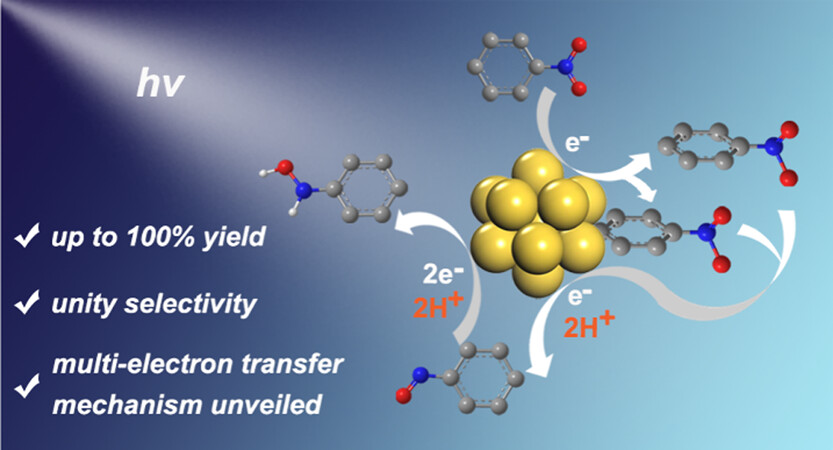
摘要:This work describes the use of a pyrene-modified N-heterocyclic carbene (NHC)-stabilized Au13 nanocluster (denoted as Au NC) as the visible light photocatalyst in the multielectron reduction of nitrobenzene (NB). The photoreduction of NB to N-phenylhydroxylamine (PHA) proceeds with unity selectivity and product yield after 3 h of irradiation. The photocatalytic reduction proceeds via a four-electron and four-proton process. NB is first reduced by the excited state of the Au NC (Au NC*) to yield the ion pair (Au NC+ and NB•–). Further excitation of Au NC within the ion pair and involvement of external protons result in the reduction of NB•– to nitrosobenzene (NSB). The diffusion-controlled electron transfer in the first step is the rate-determining step, with the combination of dynamic and static quenching in the second step expediting electron transfer from Au NC* to NB•–. The third and fourth electron transfer events that lead to the final product are much faster than the first. Density functional theory (DFT) simulations link the selective formation of PHA to its weak adsorption on Au NC, driven by hydrophobic interactions and electronic effects of the pyrene ligands of Au NC. The excited-state reduction potential of Au NC* is −1.69 V vs SCE (Saturated Calomel Electrode), comparable to those of commonly used CdS quantum dot-based photocatalysts. This NB photoreduction study has afforded valuable insights into the intricate mechanisms at NHC-stabilized gold nanoclusters in energy-demanding multielectron transfer photocatalytic reactions.

作者:Yang, W.; Li, P.; Han, Y.; Zhao, Z.; Tian, L.; Zhang, Z.; Humphrey, M. G.; Zhang, C.*; Hu, K.*

期刊: Chem. Sci. 2025, 16, 20229-20238

报道链接: https://mp.weixin.qq.com/s/XFDJj5VVvTrlP4cNc1kMWA

摘要:Photoelectrochemical (PEC) cells are emerging tools for fine chemical synthesis, but often suffer from low solar-to-product conversion efficiency, especially in energy-demanding reactant activation. Herein, we report chlorination and oxygenation of energy-demanding C(sp3)–H bonds using a two-step coupled PEC cell, avoiding the direct generation of high-energy chlorine radicals (Cl˙). The photoanode consists of a BiVO4 semiconductor modified with TiO2 and a CoNi2Ox chlorine evolution reaction (CER) catalyst. Under 1 sun illumination, the BiVO4/TiO2/CoNi2Ox photoanode showed a photocurrent density of 2.9 mA cm−2 for CER at 0.8 V vs. the reversible hydrogen electrode (RHE) with the highest applied bias photon-to-current efficiency of 3.20%. Subsequent homolysis of Cl2 under white light generates Cl˙, activating C(sp3)–H bonds following hydrogen atom transfer. The PEC cell selectively chlorinated hydrocarbons under argon, and enabled oxygenation to afford aldehydes, ketones, and alcohols when the atmosphere was switched to dioxygen, offering a green and efficient synthetic approach. Studies on the reaction mechanism revealed that Cl˙ is the key reactive intermediate responsible for C(sp3)–H bonds activation. This work offers a solar-driven energy-efficient strategy for the generation of Cl˙ from chloride salts and activation of energy-demanding C(sp3)–H bonds, highlighting its great potential in advancing green chemical synthesis.

作者:Yang, W.; Li, P.; Zhao, Z.; Tian, L.; Niu, F.; Sampaio, R. N.*; Hu, K.*

期刊:CHEM-ASIAN J. 2025, 20, e00768
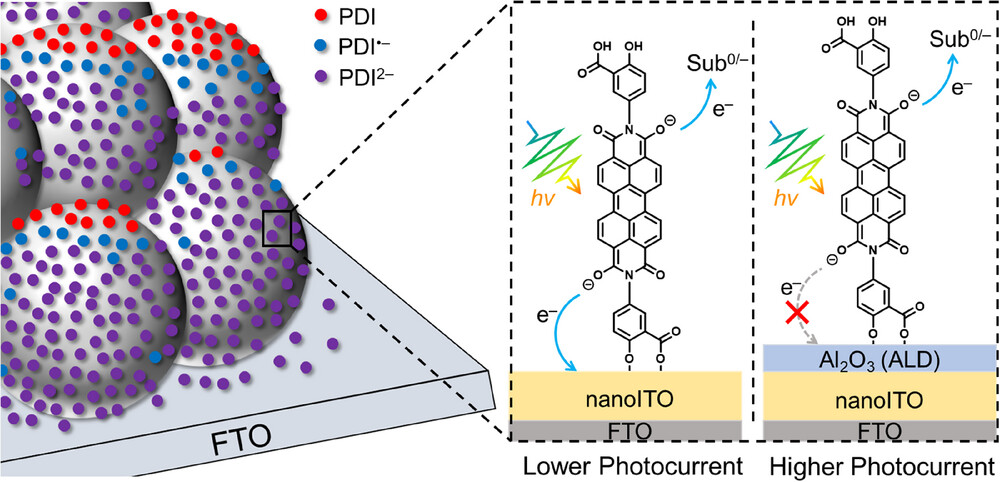
摘要:Dye‐sensitized photoelectrochemical cells (DSPECs) are emerging inexpensive devices for solar fuels production and chemical upgrading, yet their efficiency remains limited by poor photocurrent density especially in energy‐demanding reactions. Here, we introduce a molecularly engineered photocathode that integrates perylene diimides (PDI)—capable of consecutive photoinduced electron transfer (ConPET) to generate an excited state (PDI2−*) with potent reducing power—on a transparent conductive indium tin oxide nanoparticle (nanoITO) thin film substrate. By introducing an Al2O3 atomic layer via atomic layer deposition (ALD) onto the interface of PDI and nanoITO, the nonproductive back‐electron transfer (BET) was significantly suppressed by over 95%, as quantified by transient absorption spectroscopy, while preserving the exceptional photoredox activity of PDI2−*. This novel photocathode enables efficient activation of energy‐demanding reduction reactions requiring highly negative reduction potentials, exemplified by the dehalogenation of 4‐bromoacetophenone. This work demonstrates a novel approach for DSPECs, prioritizing interfacial control to unlock the potential of energy‐demanding photoredox transformations.

作者:Li, P.; Bourgois, C.; Glaser, F.; De Kreijger, S.; Cadranel, A.; Troian-Gautier, L.*; Hu, K.*

期刊:J. Am. Chem. Soc. 2025, 147, 12082-12091
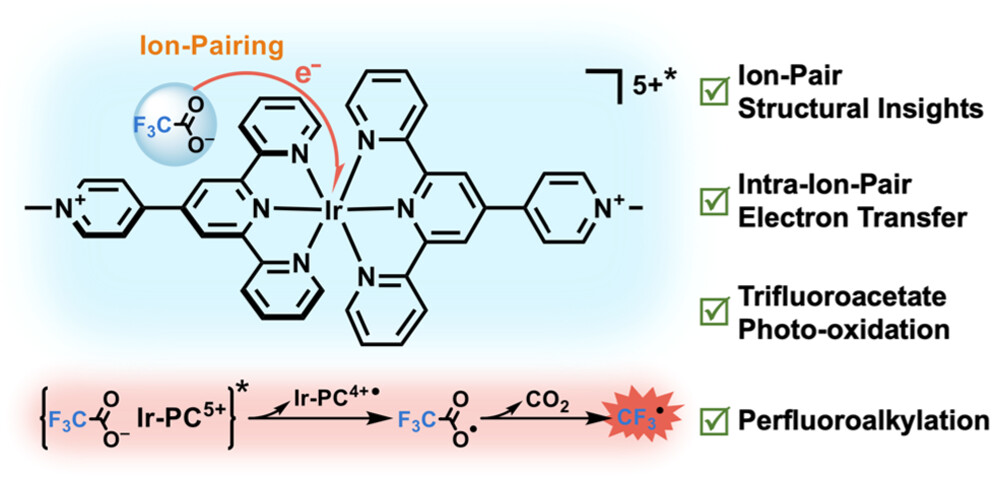
摘要:Trifluoromethylation is a key transformation in drug and agrochemical synthesis, yet current reagents often suffer from high cost, low atom economy, and low scalability. Trifluoroacetate derivatives represent ideal reagents as they are highly abundant and cheap, but their very positive one electron oxidation potential (∼2.3 V vs NHE) often hampers their widespread use in photoredox catalysis. Indeed, at these potentials, selectively oxidizing trifluoroacetate over reaction solvent or partner substrates becomes challenging. Herein, we present a novel approach that circumvents these limitations through the use of a pentacationic Ir(III) photosensitizer that forms a strong 1:1 ion-pair with trifluoroacetate in acetonitrile (Keq = 6 × 10⁴ M–1). This ion-pair formation enables rapid and efficient photooxidation of trifluoroacetate in ∼90 ps without significant solvent or partner substrate oxidation, as indicated by femtosecond and nanosecond UV–visible transient absorption spectroscopy. The CF3• radicals so generated are shown to trifluoromethylate a range of partner substrates, including aromatic compounds, heterocycles, natural products and pharmaceutically relevant products, in moderate yields (20–60%). Control experiments reveal that ion-pairing is crucial for the successful generation of CF3• as photosensitizers that oxidize trifluoroacetate without forming ion pairs were ineffective for trifluoromethylation. This probably originates from the more thermodynamically accessible substrate oxidation outcompeting diffusional trifluoroacetate oxidation. The reaction was further exemplified to allow functionalization with a variety of perfluoroalkyl groups of different chain lengths. The approach reported herein could also be used for the removal and/or use of perfluoroalkyl substances (PFAS), often called “forever chemicals”, that have recently raised environmental and health concern.

作者:Zhao, Z.; Li, J.; Yuan, W.; Cheng, D.; Ma, S.; Li, Y.; Shi, Z; Hu, K.*

期刊:J. Am. Chem. Soc, 2023, 146 (2), 1364-1373 (Front Cover)

摘要:The emerging field of photoredox catalysis in mammalian cells enables spatiotemporal regulation of a wealth of biological processes. However, the selective cleavage of stable covalent bonds driven by low-energy visible light remains a great challenge. Herein, we report that red light excitation of a commercially available dye, abbreviated NMB+, leads to catalytic cleavage of stable azo bonds in both aqueous solutions and hypoxic cells and hence a means to photodeliver drugs or functional molecules. Detailed mechanistic studies reveal that azo bond cleavage is triggered by a previously unknown consecutive two-photon process. The first photon generates a triplet excited state, 3NMB+*, that is reductively quenched by an electron donor to generate a protonated NMBH•+. The NMBH•+ undergoes a disproportionation reaction that yields the initial NMB+ and two-electron-reduced NMBH (i.e., leuco-NMB, abbreviated as LNMB). Interestingly, LNMB forms a charge transfer complex with all four azo substrates that possess an intense absorption band in the red region. A second red photon induces electron transfer from LNMB to the azo substrate, resulting in azo bond cleavage. The charge transfer complex mediated two-photon catalytic mechanism reported herein is reminiscent of the flavin-dependent natural photoenzyme that catalyzes bond cleavage reactions with high-energy photons. The red-light-driven photocatalytic strategy offers a new approach to bioorthogonal azo bond cleavage for photodelivery of drugs or functional molecules.

作者: Li, P.; Liu, R.; Zhao, Z.; Yang, W.; Niu, F.; Tian, L.; Hu, K.*

期刊:ACS Sustainable Chem. Eng. 2024, 12, 1, 10–17
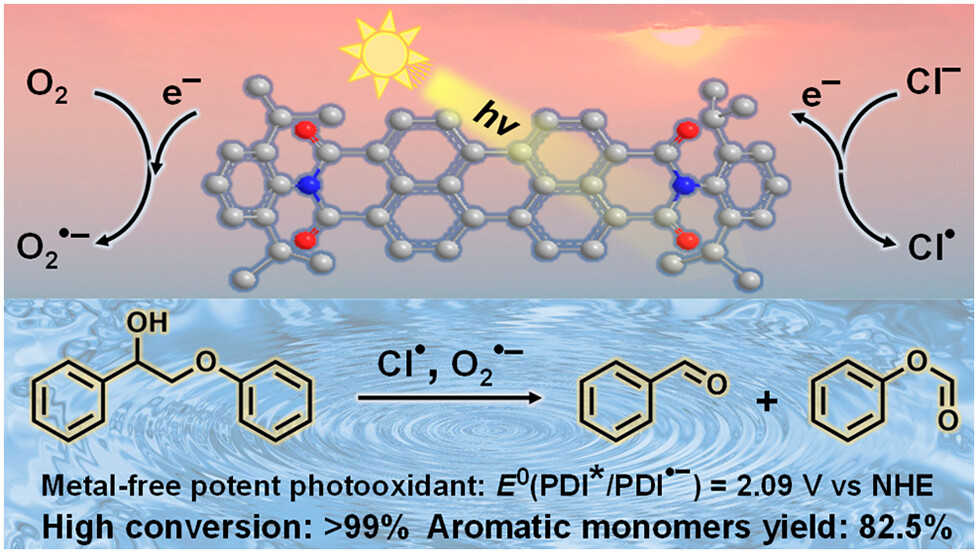
摘要:Lignin valorization to aromatic fine chemicals requires selective cleavage of a high-energy C–C bond under mild conditions. Herein, we report the efficient and selective C–C bond cleavage of lignin model substrates through a chlorine (Cl) atom as the hydrogen atom transfer agent generated by visible-light excitation of the metal-free photocatalyst perylene diimide. With the assistance of the Cl atom, the overall yield of C–C bond cleavage products in model substrate β–O–4 linkages reached 82.5% under visible-light excitation. This work makes use of metal-free photocatalysts and ubiquitous chloride as an alternative sustainable method for lignin depolymerization.

作者: Kang, W.; Li, B.; Zhao, Z.; Sun, S.; Feng, C.; Hu, K.*; Houk, K.N.; Guo, H.*

期刊:ACS Catalysis 2023 13 (20), 13588-13596.

摘要:Anions are the reduced form of precatalysts that are a special type of photoredox catalyst, unlike traditional iridium or ruthenium complexes. Among them, radical anions often have much shorter excited-state lifetimes because of fast nonradiative decay. Herein, we report the discovery of thioxanthone hydrogen anion (5), a super-reducing photocatalyst with a long excited-state lifetime (Eox* = −2.74 V vs SCE, τS = 4.1 ns). Using 5 as a catalytic reductant, we developed a series of photoreductions, including hydrogenation, reductive dehalogenation, deoxygenative hydrogenation, and deoxygenation, thereby demonstrating the feasibility of the 2e– consecutive photoinduced electron transfer (ConPET) strategy and the versatility of the catalyst.

作者: Weng, W.; Lin, Z.; Zhang, H.; Niu, F.; Wang, C.; Hu, K*; Guo, J.*

期刊:JACS Au 2023, 3, 12, 3391–3399.
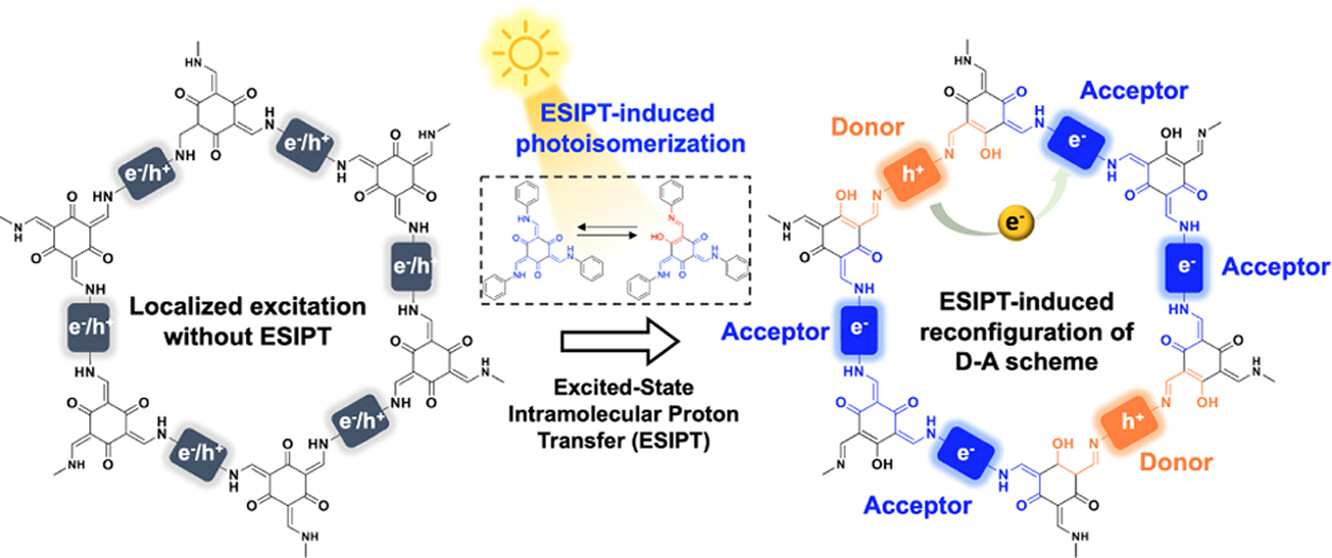
摘要:Photoexcitation of keto–enamine allows intramolecular proton transfer from C–NH to C═O, leading to tautomerization, while the photogenerated isomers are excluded from the study of photocatalytic applications. Herein, we demonstrate the photoisomerization of keto–enamine linkages on covalent organic frameworks (COFs) induced by excited-state intramolecular proton transfer (ESIPT). Partial enolization generates partially enolized photoisomers with a mixture of keto (C═O) and enol (OH) forms, conferring extended π-conjugation with an increase in electron density. The spatially separated D–A configuration is thus rebuilt with the enol–imine-linked branch as a donor and the keto–enamine-linked branch as an acceptor, and in turn, the photoinduced charges transfer between the two adjacent branches with a long lifetime. We further prove that the partially enolized photoisomer is a key transition instead of the keto–enamine form as an excited-state model to understand the photocatalytic behaviors. Therefore, ESIPT-induced photoisomerization must be considered for rationally designing keto–enamine-linked COFs with enhanced photocatalytic activity. Also, our study points toward the importance of controlling excited-state structures for long-lived separated charges, which is of particular interest for optoelectronic applications.

作者: Sun, X.; Liu, j.; Wang, H.; Li, Q.; Zhou, J.; Li, P.; Hu, K*; Wang, C*.;Jiang, B.*

期刊:Chem. Eng. J., 2023, 472, 144750
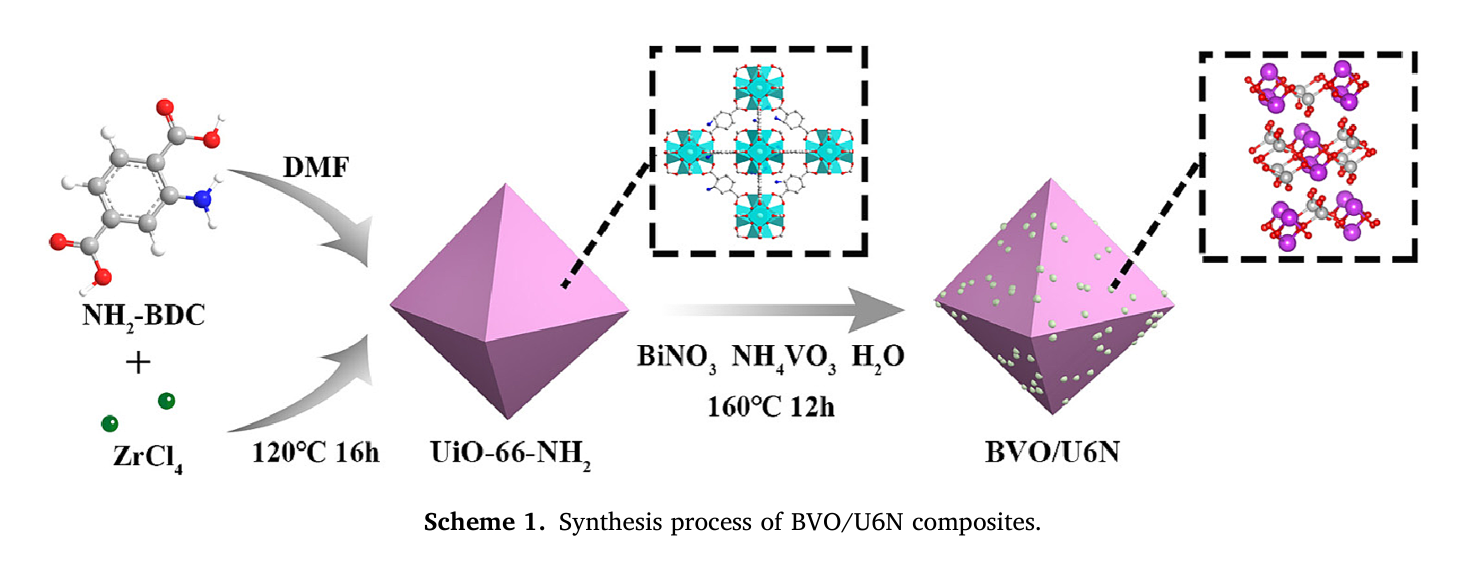
摘要:The photocatalytic efficiency can be enhanced by constructing Z-scheme heterostructures. However, there is still a lack of comprehensive and direct evidence regarding the charge transfer pathway and mode during the photocatalytic process. A composite photocatalyst BiVO4/UiO-66-NH2 (BVO/U6N) was prepared by in-situ loading BiVO4 nanoparticles onto the surface of UiO-66-NH2 using a hydrothermal method. This catalyst effectively promotes the photocatalytic conversion of thioanisole to sulfoxide. The differences between BiVO4 and UiO-66-NH2 in band structure and Fermi energy level enable the composite to act according to the Z-scheme charge transfer pattern, which significantly enhances charge separation efficiency. In-situ X-ray photoelectron spectroscopy (in-situ XPS) combined with DFT calculation confirmed the transfer of electrons from UiO-66-NH2 to BiVO4, driven by an internal electric field (IEF) upon hybridization. This demonstrates the formation of a Z-scheme photogenerated charge transfer pathway in the BVO/U6N composite. The direct Z-scheme system significantly enhances the carrier redox, resulting in a sulfoxide yield of 95.21% for the optimized sample in methanol, which is 5 times and 4.1 times higher than that of UiO-66-NH2 and BiVO4, respectively. BVO/U6N exhibits efficient photocatalysis and selectivity towards various substrate sulfides, making it a highly promising heterogeneous photocatalyst.

作者: Han, Y.; Chang, M.; Zhao, Z.; Niu, F.; Zhang, Z.; Sun, Z.; Zhang, L.; Hu, K.*

期刊:ACS Appl. Mater. Interfaces 2023, 15, 9, 11678–11690.
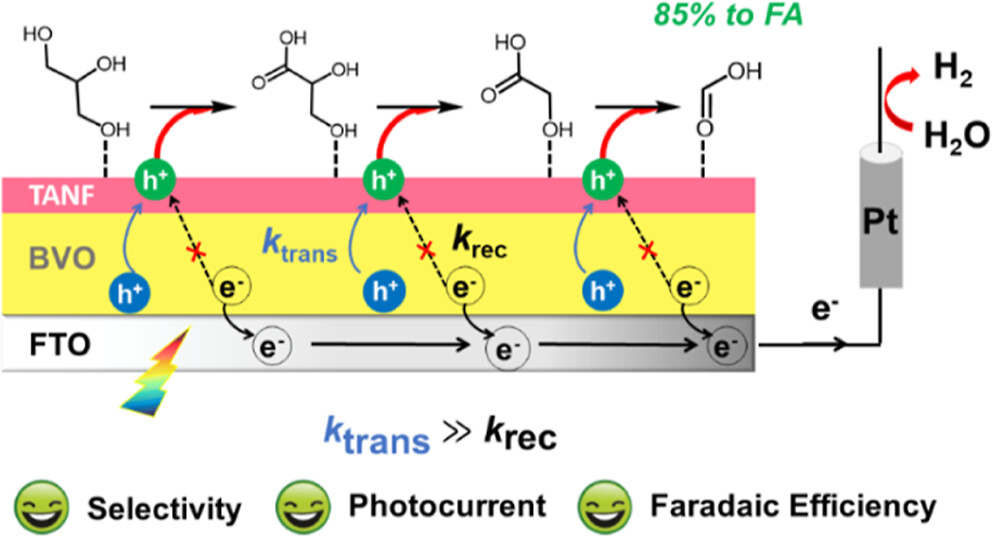
摘要:The integration of the glycerol oxidation reaction (GOR) with the hydrogen evolution reaction in photoelectrochemical (PEC) cells is a desirable alternative to PEC water splitting since a large quantity of glycerol is easily accessible as the byproduct from the biodiesel industry. However, the PEC valorization of glycerol to the value-added products suffers from low Faradaic efficiency and selectivity, especially in acidic conditions, which is beneficial for hydrogen production. Herein, by loading bismuth vanadate (BVO) with a robust catalyst composed of phenolic ligands (tannic acid) coordinated with Ni and Fe ions (TANF), we demonstrate a modified BVO/TANF photoanode for the GOR with a remarkable Faradaic efficiency of over 94% to value-added molecules in a 0.1 M Na2SO4/H2SO4 (pH = 2) electrolyte. The BVO/TANF photoanode achieved a high photocurrent of 5.26 mA·cm–2 at 1.23 V versus reversible hydrogen electrode under 100 mW/cm2 white light irradiation for formic acid production with 85% selectivity, equivalent to 573 mmol/(m2·h). Transient photocurrent and transient photovoltage techniques and electrochemical impedance spectroscopy along with intensity-modulated photocurrent spectroscopy indicated that the TANF catalyst could accelerate hole transfer kinetics and suppress charge recombination. Comprehensive mechanistic investigations reveal that the GOR is initiated by the photogenerated holes of BVO, while the high selectivity to formic acid is attributed to the selective adsorption of primary hydroxyl groups in glycerol on TANF. This study provides a promising avenue for highly efficient and selective formic acid generation from biomass in acid media via PEC cells.

作者: Niu, F.; Zhang, P.; Zhang, Z.; Zhou, Q.; Li, P.; Liu, R.; Li, W.; Hu, K.*

期刊:J. Mater. Chem. A, 2023, 11, 4170.
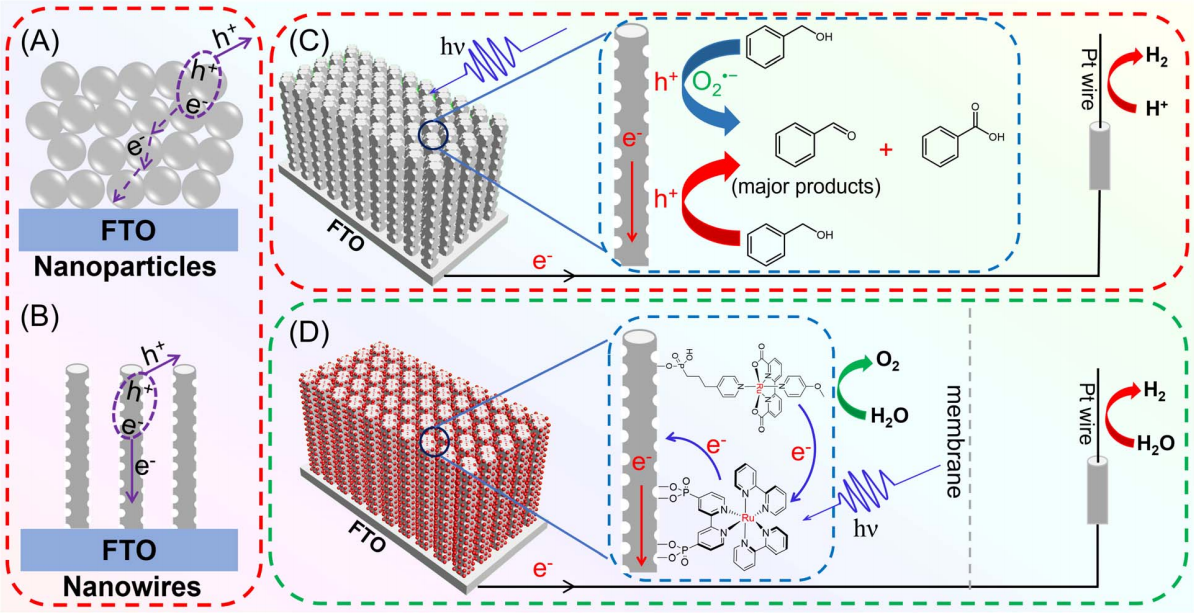
摘要:Ultrathin semiconductor nanowires are promising alternatives to nanoparticle or bulk counterparts for the construction of photoanodes for solar energy conversion, because of their profuse surface reactive sites and excellent charge transport properties. Herein, well-aligned ultrathin corrugated nanowire TiO2 (UCW-TiO2) thin films with a diameter of 10 nm grown on fluorine-doped tin oxide (FTO) substrates by a unique monomicelle-directed assembly method are applied as a versatile photoanode platform. On this platform, photoanodes were used for direct photoelectrochemical (PEC) benzyl alcohol oxidation and can also be dye-sensitized for visible-light driven water oxidation. The conversion of benzyl alcohol (BA) over the pristine UCW-TiO2 photoanode is close to 100%, and the selectivity can reach 90.2% with a faradaic efficiency of 93% after 15 h. With surface anchoring of a suitable chromophore and oxygen evolution catalysts (OECs), the dye-sensitized UCW-TiO2 photoanode achieves 5-fold larger faradaic efficiency for water oxidation than that of a spherically structured TiO2 assembled photoanode. Electrochemical and spectroscopic measurements demonstrate that the ultrathin corrugated nanowire structured TiO2 accelerates electron transport kinetics and suppresses recombination of surface accumulated holes and electrons compared with spherically structured TiO2. Both BA oxidation and water oxidation studies show that the UCW-TiO2 is a versatile photoanode platform for a variety of highly efficient solar energy conversion applications.

作者: Li, P.; Liu, R.; Zhao, Z.; Niu, F.; Hu, K.*

期刊:Chem. Commun., 2023, 59, 1777
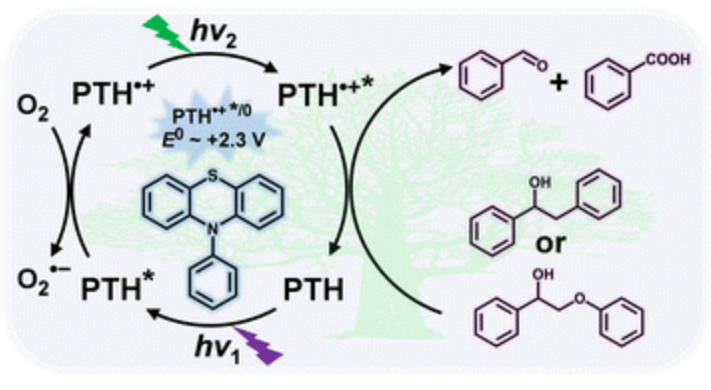
摘要:Photocatalytic lignin valorization has caught widespread attention; yet the reaction systems often employ noble metal complexes, hydrogen atom transfer (HAT) agents, and/or sacrificial electron donors/acceptors that do not comply with atom economy or environmental friendliness. Herein, we discovered that N-phenylphenothiazine (PTH) as a metal-free photocatalyst induced the cleavage of the lignin Cα–Cβ bond under ambient conditions free of those additional agents with a high yield and selectivity toward benzoic acid. Transient spectroscopic investigations revealed that the energy-demanding Cα–Cβ bond cleavage was induced by the potent oxidant, 2PTH˙+*, that was derived from consecutive two-photon excitation of PTH.

作者: Wang, X.; Liu, R.; Tian, L.; Bao, J.; Zhao, C.; Niu, F.; Cheng, D.; Lu, Z.; Hu, J.; Meyer, G. J.*; Hu, K.*

期刊:J. Phys. Chem. C 2022, 126, 18374−18382.
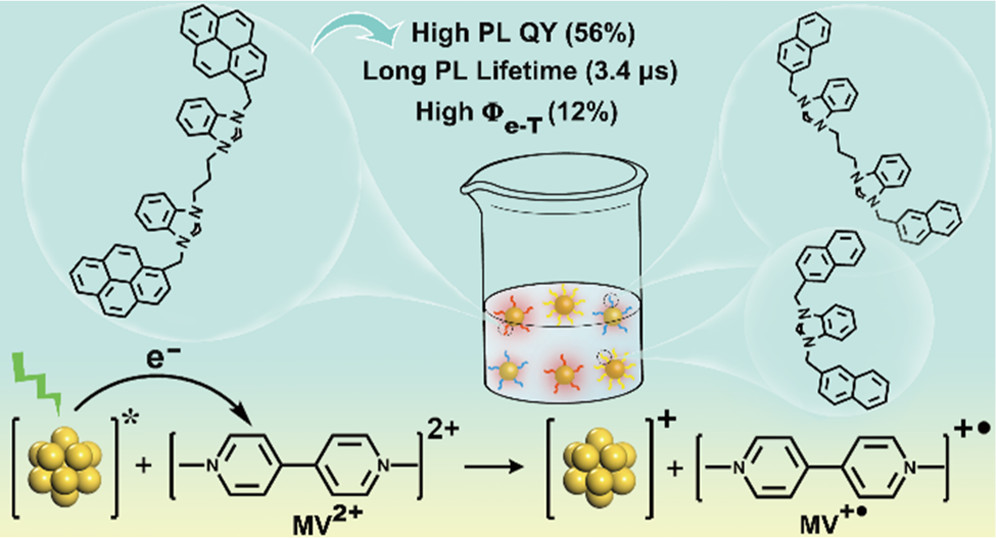
摘要:Atomically precise N-heterocyclic carbene (NHC)-stabilized gold nanoclusters (Au NCs) have attracted great attention among a variety of gold nanoclusters. Herein, a series of three NHC-stabilized Au13 NCs have been synthesized featuring ligands with different steric hindrances. Their electrochemical and photophysical properties were investigated. The bidentate NHC ligands with pendant pyrenes rendered the most sterically hindered Au13 NC, [Au13(bis-NHCPyr)5Cl2]3+, highly luminescent (quantum yield, 56%) and long-lived (3.4 μs, dichloromethane) among the three Au13 NCs. The excellent photoluminescence properties were attributed to the suppression of excited-state vibrational relaxation arising from the cluster structural rigidity. Further transient spectroscopic investigation of the Au NC excited state also showed favorable electron transfer to methyl viologen with the highest quantum yield from [Au13(bis-NHCPyr)5Cl2]3+ (Φe–T, 12%). Understanding the relationship between the excited-state behavior and the sterically hindered structure of NHC-ligated Au NCs will assist in better designing NHC-stabilized Au NCs as photosensitizers for applications in organic photoredox catalysis, sensors, and solar energy conversion.

作者: Li, P.; Deetz, A. M.; Hu, J.; Meyer, G. J.*; Hu, K.*

期刊:J. Am. Chem. Soc. 2022, 144, 17604-17610.
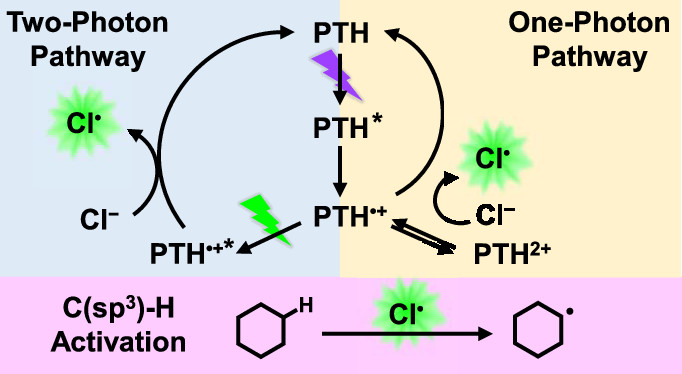
摘要:Chloride oxidation has tremendous utility in the burgeoning field of chlorine-mediated C–H activation, yet it remains a challenging process to initiate with light because of the exceedingly positive one-electron reduction potential, E° (Cl•/–), beyond most common transition-metal photooxidants. Herein, two photocatalytic chloride oxidation pathways that involve either one- or consecutive two-photon excitation of N-phenylphenothiazine (PTH) are presented. The one-photon pathway generates PTH•+ by oxidative quenching that subsequently disproportionates to yield PTH2+ that oxidizes chloride; this pathway is also accessed by the electrochemical oxidation of PTH. The two-photon pathway, which proceeded through the radical cation excited state, 2PTH•+*, was of particular interest as this super-photooxidant was capable of directly oxidizing chloride to chlorine atoms. Laser flash photolysis revealed that the photooxidation by the doublet excited state proceeded on a subnanosecond timescale through a static quenching mechanism with an ion-pairing equilibrium constant of 0.36 M–1. The PTH photoredox chemistry was quantified spectroscopically on nanosecond and longer time scales, and chloride oxidation chemistry was revealed by reactivity studies with model organic substrates. One- and two-photon excitation of PTH enabled chlorination of unactivated C(sp3)–H bonds of organic compounds such as cyclohexane with substantial yield enhancement observed from inclusion of the second excitation wavelength. This study provides new mechanistic insights into chloride oxidation catalyzed by an inexpensive and commercially available organic photooxidant.

报道链接: https://www.x-mol.com/news/821854

作者: Niu, F.; Zhou, Q.; Han, Y.; Liu, R.; Zhao, Z.; Zhang, Z.; Hu, K.*

期刊:Acs Catal. 2022, 12,16, 10028-10038.
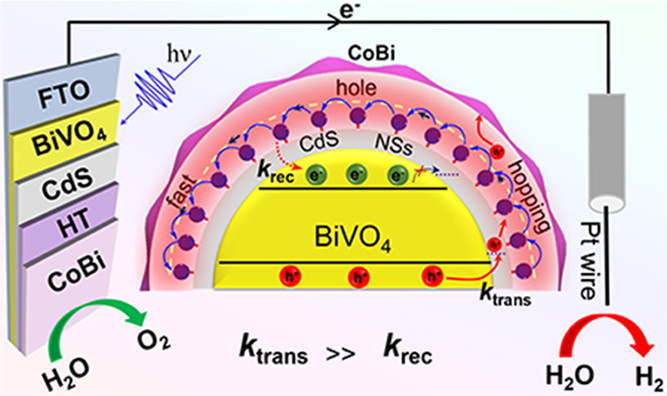
摘要:Photon energy loss to interfacial charge recombination is one of the key challenges to achieving high efficiencies for solar water splitting in photoelectrochemical cells (PECs). Herein, BiVO4-based photoanodes are constructed, where BiVO4, cadmium sulfide nanosheets (CdS NSs), hole transport molecules (HTs), and oxygen evolution cocatalysts (OECs) assemble sequentially in a cascade band alignment for efficient photogenerated hole extraction and accumulation to OECs. In the photoanode assemblies, CdS NSs act as energetic barriers to suppress surface recombination. Thiolate-functionalized aryl amine HTs that anchor to CdS NSs are interfacial-charge-transfer mediators that efficiently extract the photogenerated holes. The oxidized HT (HT+) hops isoenergetically among adjacent HTs and finally accumulates oxidative equivalents to OEC. Transient absorption spectroscopy along with intensity-modulated photocurrent spectroscopy proves that HTs and CdS NSs accelerate hole-transfer kinetics and suppress recombination of surface-accumulated holes and electrons. Among the three HTs, triphenylamine shows the best performance. The best-performing photoanode assembly exhibits increased photocurrent density from 0.87 to 5.2 mA/cm2. The molecular approach to hole extraction from BiVO4 photoanodes provides a promising avenue for efficient photogenerated charge separation and collection to optimize the performance of PEC for water splitting.

报道链接: https://www.x-mol.com/news/781510

作者: Zhao, Z.; Niu, F.; Li, P.; Wang, H.; Zhang, Z.; Meyer, G. J.*; Hu, K.*

期刊:J. Am. Chem. Soc. 2022, 144, 7043-7047 (Front Cover).

摘要:Photoexcitation of molecular radicals can produce strong reducing agents; however, the limited lifetimes of the doublet excited states preclude many applications. Herein, we propose and demonstrate a general strategy to translate a highly energetic electron from a doublet excited state to a ZrO2 insulator, thereby increasing the lifetime by about 6 orders of magnitude while maintaining a reducing potential less than −2.4 V vs SCE. Specifically, red light excitation of a salicylic acid modified perylene diimide radical anion PDI•– anchored to a ZrO2 insulator yields a ZrO2(e–)|PDI charge separated state with an ∼10 μs lifetime in 23% yield. The ZrO2(e–)s were shown to drive CO2 → CO reduction with a Re catalyst present in micromolar concentrations. More broadly, this strategy provides new opportunities to reduce important reagents and catalysts at low concentrations through diffusional electron transfer.

报道链接: https://www.x-mol.com/news/754800

作者: Song, Y.; Li, A.; Li, P.; He, L.; Xu, D.; Wu, F.; Zhai, F.; Wu, Y.; Hu, K.*; Wang, S.*; Sheridan, M. V.*

期刊:Chem. Mater. 2022, 34, 2771-2778.
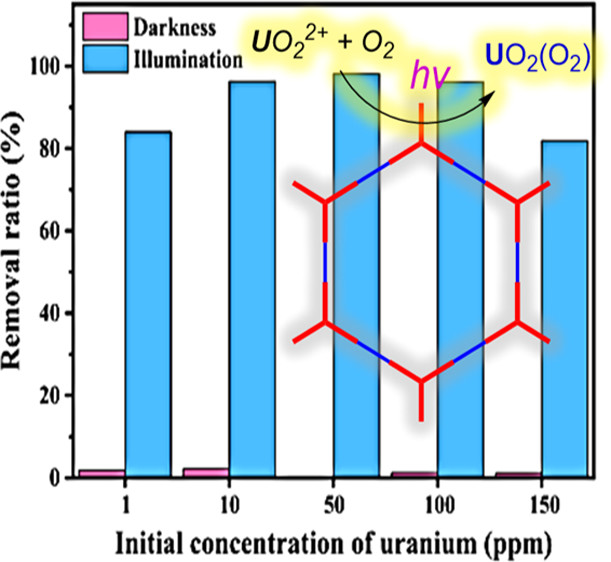
摘要:The donor–acceptor covalent organic framework (COF) TTT–DTDA (TTT = thieno[3,2-b]thiophene-2,5-dicarbaldehyde and DTDA = 4,4′,4″-(1,3,5-triazine-2,4,6-triyl)trianiline) was prepared and found to have long-lived excited states (>100 ms) characterized by transient absorption spectroscopy. These excited-state lifetimes were sufficient to perform the direct photoreduction of uranium at ppm concentration levels. The photoreduction of soluble uranyl species to insoluble reduced uranium products is an attractive separation for uranium, typically accomplished with sacrificial reagents and protective gases. In the case of TTT–DTDA, illumination in aqueous solutions containing only uranyl ions produced crystalline uranyl peroxide species ([UO2(O2)]) at the COF that were characterized by powder X-ray diffraction, X-ray photoelectron spectroscopy, and infrared spectroscopy. The maximum absorption capacity of TTT–DTDA was found to be 123 mg U/g COF at pH 5 after 10 h of illumination in solutions devoid of sacrificial reagents or protective gases. The TTT–DTDA COF was recyclable and maintained high selectivity for uranium in competing ion experiments, which are necessary requirements for a practical uranium extraction strategy based on photochemical uranium reduction.

作者: Niu, F.; Zhou, Q.; Liu, R.; Hu, K.*

期刊:ACS Appl. Energy Mater. 2022, 5 (1), 1244-1251.
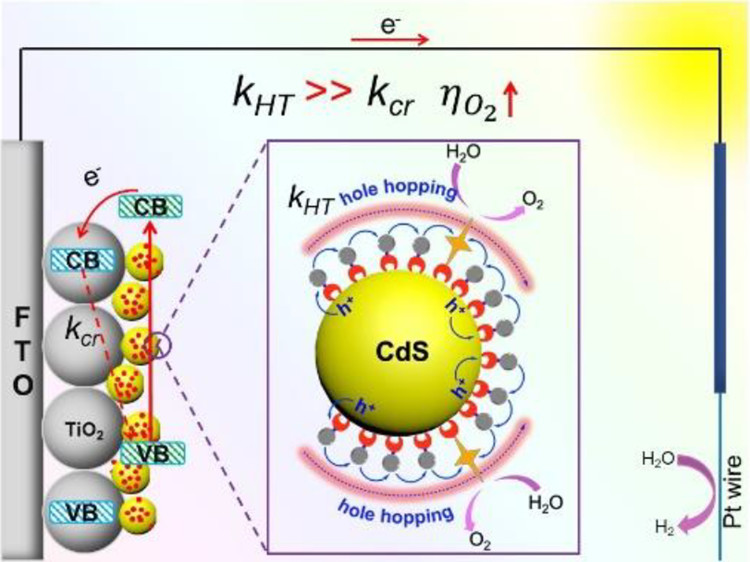
摘要:Water oxidation is typically the rate-limiting half-reaction for water splitting. This is particularly problematic for II-VI materials where chalcogenide oxidation competes favorably with water oxidation. Herein, we introduce and characterize a hybrid quantum dot (QD)-molecular photoanode assembly in which CdS QDs with carbazole-derived hole-transport molecules (HTs) anchoring on the surfaces were immobilized on a mesoporous TiO2 thin film. Band gap excitation of the CdS QDs resulted in excited state electron transfer to the conduction band of TiO2 (kinj > 108 s–1) as well as hole transfer from the CdS QD to the surface-anchored HT (kHT > 108 s–1). Lateral and isoenergetic HT+/HT “hole transfer” translates the oxidizing equivalents across the CdS QD surface. Transient spectroscopic measurements, as well as Monte Carlo simulations, show that rapid lateral hole hopping across CdS QDs kinetically outcompetes interfacial charge recombination by three orders of magnitude in time. When a molecular water oxidation catalyst was incorporated into the photoanode assembly, HT+/HT lateral hole hopping resulted in sustained water oxidation. When the HT molecule was present, the faradaic efficiency of water oxidation was threefold larger. Taken together, this study demonstrates that rapid hole transfer of oxidizing equivalents to a catalyst can outcompete photoanodic sulfide oxidation and paves the way for future study of HT-passivated semiconducting materials with favorable band gaps and energetics for water splitting.

作者: Cheng, D.; Liu, R.; Tian, L.; Zhou, Q.; Niu, F.; Yue, Y.*; Hu, K.*

期刊:ACS Appl. Nano Mater. 2021, 4 (12), 13413-13424.
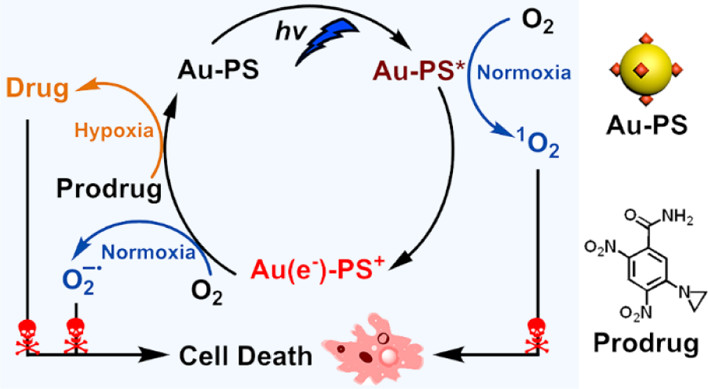
摘要:Photocatalytic activation of prodrugs for killing cancer cells is an attractive alternative phototherapy to photodynamic therapy that typically relies on the supply of oxygen. Although prodrugs are widely developed, few other than Pt(IV) complexes are studied for photocatalytic activation. Herein, we report the photocatalytic reduction of nitrobenzene to aniline, an important chemical conversion for a large class of nitroaromatic prodrugs in cancer therapy that was previously limited to only enzyme-catalyzed activation. The carefully designed photocatalyst is a photosensitizer (PS)-functionalized gold nanocluster (Au NC) (abbreviated as Au-PS) in which a ruthenium coordination compound as the PS is covalently linked to the glutathione-ligated Au NC surface. Visible light excitation of the photocatalyst reduces nitrobenzene to aniline with 100% selectivity. The remarkably high selectivity is attributed to the specific catalytic nature of the reduced Au NC from photoinduced charge separation within the Au-PS analyzed by time-resolved absorption spectroscopy. In vitro experiments show that the nitroaromatic prodrug 5-(aziridin-1-yl)-2,4-dinitrobenzamide (CB1954) induces significant cytotoxicity in the presence of the Au-PS and light under hypoxia. The photocatalytic nitroaromatic prodrug activation by the Au-PS provides an alternative approach in the category of photochemotherapy to confront hypoxic cancer cells.

作者: Shen, L.; Zhang, S.; Ding, H.; Niu, F.; Chu, Y.; Wu, W.*; Hu, Y.; Hu, K.*; Hua, J.*

期刊:Chem. Commun. 2021, 57, 5634-5637.
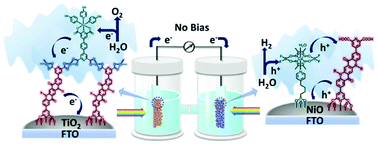
摘要:Pure organic dye QAP-C8 based on quinacridone (QA) with octyl side chains as the donor and pyridine dicarboxylic acid (PDA) as the acceptor was first used in both the photoanode and the photocathode of photoelectrochemical cells. A tandem device with QAP-C8 as the photosensitizer realized overall water splitting and showed a STH of 0.11% under neutral pH conditions without an external bias.

作者: Han, X.; Liu, R.; Zhang, H.; Zhou, Q.; Feng, W.*; Hu, K.*

期刊:Chem. Asian J. 2021, 16, 1603-1607.
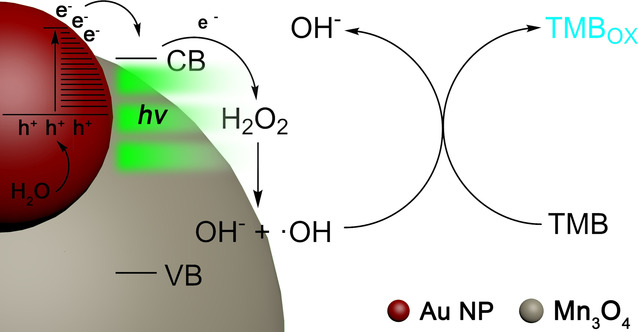
摘要:Enzyme-mimicking artificial nanomaterials often termed nanozymes have broad applications in many fields, including biosensing, pollutant degradation and cancer diagnosis. Herein, we introduce a plasmonic gold nanoparticle-modified Mn3O4 nanozyme (Mn3O4-Au). Visible or near infrared light excitation into the plasmonic absorption band of the surface-bound gold nanoparticles enhances the catalytic oxidation of tetramethylbenzidine (TMB). The mechanism of light-enhanced peroxidase activity is proposed based on the Mn3O4 conduction band mediated hot electron transfer from photoexcited gold nanoparticles to H2O2 which undergoes further oxygen-oxygen bond cleavage to yield hydroxyl radical. The surface decoration of plasmonic gold nanoparticles endows Mn3O4-Au to be a light-regulated nanozyme.

作者: Liu, R.; Cheng, D.; Zhou, Q.; Niu, F.; Hu, K.*

期刊:ACS Appl. Nano Mater. 2021, 4, 990-994.
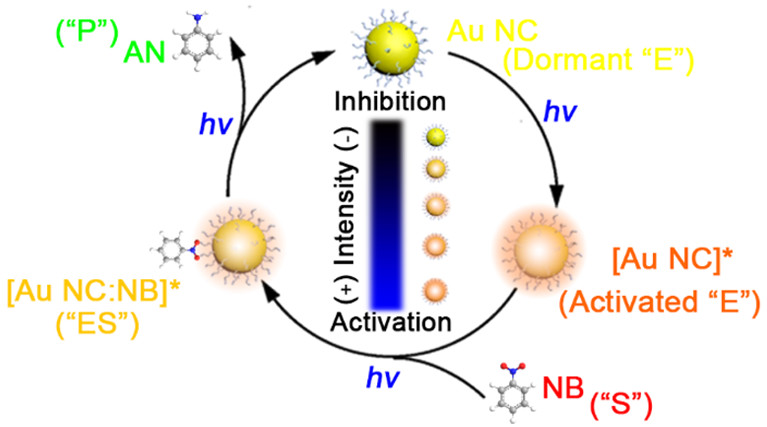
摘要:Many synthetic nanomaterials known as nanozymes can catalyze biologically relevant molecular transformations just as natural enzyme does. “Photonanozyme” utilizes light as a spatial and temporal control for the regulation of nanozyme activities. Here we report a glutathione-modified gold nanocluster as a photonanozyme that catalyzes the reduction of nitrobenzene under light. Aniline was found as the sole photoreductive product. The photocatalytic reactions at variable light fluences were found to follow the classical Michaelis–Menten enzyme kinetics from which kinetic rate constants were quantified. Intracellular reduction of a nitro-group-containing fluorescent probe demonstrates the viability of gold nanoclusters as biocompatible photonanozymes performing catalysis in a mammalian cell environment. This study reinvents gold nanoclusters as photonanozymes that mimic naturally occurring nitroreductase for potential prodrug activation.

作者: Hu, K.; Sampaio, R. N.; Schneider, J.; Troian-Gautier, L.; Meyer, G. J.*

期刊:J. Am. Chem. Soc. 2020, 142 (38), 16099-16116.
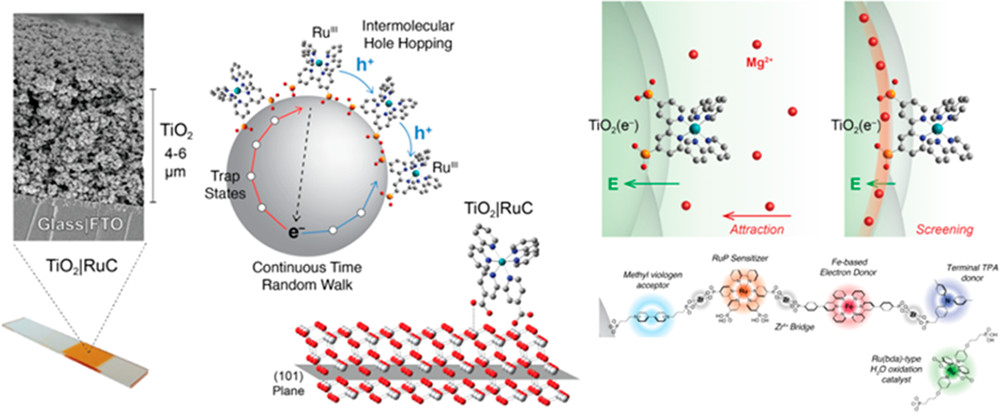
摘要:Recent advances in our mechanistic understanding of dye-sensitized electron transfer reactions occurring at metal oxide interfaces are described. These advances were enabled by the advent of mesoporous thin films, comprised of anatase TiO2 nanocrystallites, that are amenable to spectroscopic and electrochemical characterization in unprecedented molecular-level detail. The metal-to-ligand charge transfer (MLCT) excited states of Ru polypyridyl compounds serve as the dye sensitizers. Excited-state injection often occurs on ultrafast time scales with yields that can be tuned from unity to near zero through modification of the sensitizer or the electrolyte composition. Transport of the injected electron and the oxidized sensitizer (hole hopping) are both operative in the composite mechanism for charge recombination between the injected electron and the oxidized sensitizer. Sensitizers that contain a pendant electron donor, as well as core/shell SnO2/TiO2 nanostructures, often prolong the lifetime of the injected electron and provide fundamental insights into adiabatic and nonadiabatic electron transfer mechanisms. Regeneration of the oxidized sensitizer by iodide is enhanced through halogen bonding, orbital pathways, and ion pairing. A substantial ∼10 MV cm–1 electric field is created by electron injection into TiO2 nanocrystallites that induces ion migration, reports on the sensitizer dipole orientation, and (in some cases) reorients or flips the sensitizer. Dye-sensitized conductive oxides also promote long-lived charge separation with bias dependent kinetics that provide insights into the reorganization energies associated with electron and proton-coupled electron transfer in the electric double layer.

作者: Shi, Y.; Wang, R.; Yuan, W.; Liu, Q.; Shi, M.; Feng, W.; Wu, Z.; Hu, K.*; Li, F.*

期刊:ACS Mater. Lett. 2019, 1, 418-424.
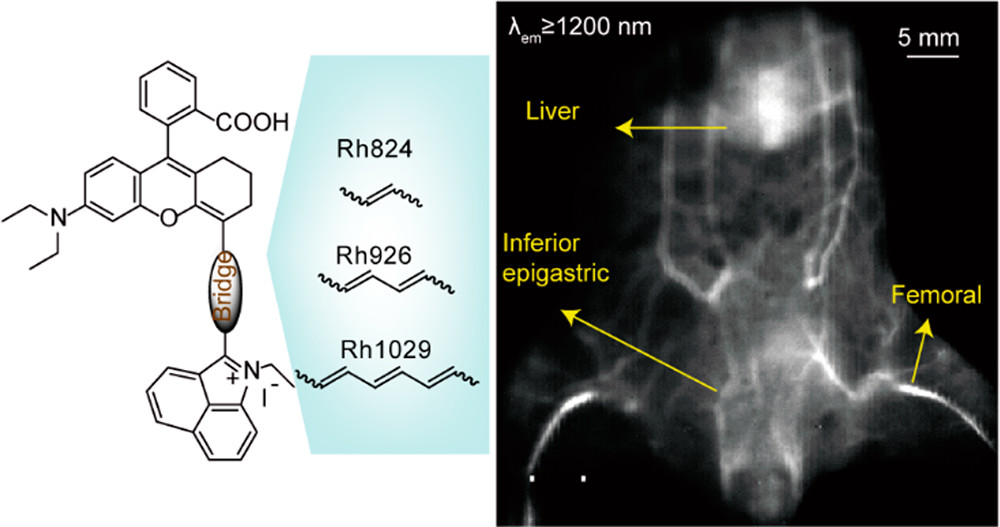
摘要:This work presents a polyene bridging strategy on Rhodamine-type dye analogues (Rh824, Rh926, and Rh1029) for tuning absorption and emission wavelengths from the first near-infrared window (NIR-I; 750–900 nm) to the unprecedented second near-infrared window (NIR-II; 1000–1700 nm). Phosphatidylcholine (PC) enclosures of the dyes improve water solubility and triple the fluorescent quantum yields. The representative NIR-II fluorophore Rh1029-PC presents significantly higher spatial resolution, compared to NIR-I fluorophore Rh824-PC, when performing in vivo vascular imaging. We construct a mouse vascular hemorrhage model and apply Rh1029-PC as the angiography agent in NIR-II window for the first time. The images show superior clarity of the hemorrhage positions in the NIR-II window, suggesting the successful application of the hybrid Rhodamine-derived dye in NIR-II fluorescent bioimaging.

作者: Shi, Y.; Wang, R.; Yuan, W.; Liu, Q.; Shi, M.; Feng, W.; Wu, Z.; Hu, K.*; Li, F.*

期刊:ACS Appl. Mater. Interfaces 2018, 10, 20377-20386
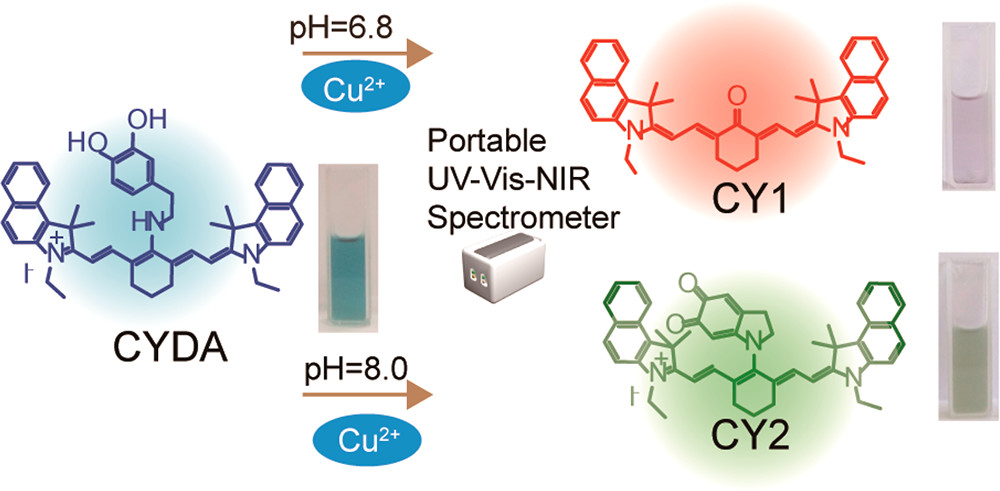
摘要:Copper(II) is one of the essential metal elements in human body, which can accumulate in many organs and finally excrete in urine. Excessive load of Cu2+ can cause liver cirrhosis, kidney dysfunction, and many neurological symptoms in the case of Wilson’s disease (WD). Therefore, the selective and efficient detection of Cu2+ is of great importance. Although various fluorescent probes have been reported for the detection of Cu2+, an efficient and capable probe is still rare for patients’ self-use on a routine basis. In this study, we developed an easy-to-use probe CY1 based on UV–vis–near-infrared absorption changes with excellent sensitivity and selectivity for Cu2+. The mechanism of oxidation of CY1 by Cu2+ was first explored. We demonstrated the role of the probe in the quantitative detection of Cu2+ in urine from WD patients and showed that it has great potential for clinical applications.

作者: Hu, K.*; Sheiko, S. S.*

期刊:Chem. Commun. 2018, 54, 5899-5902.
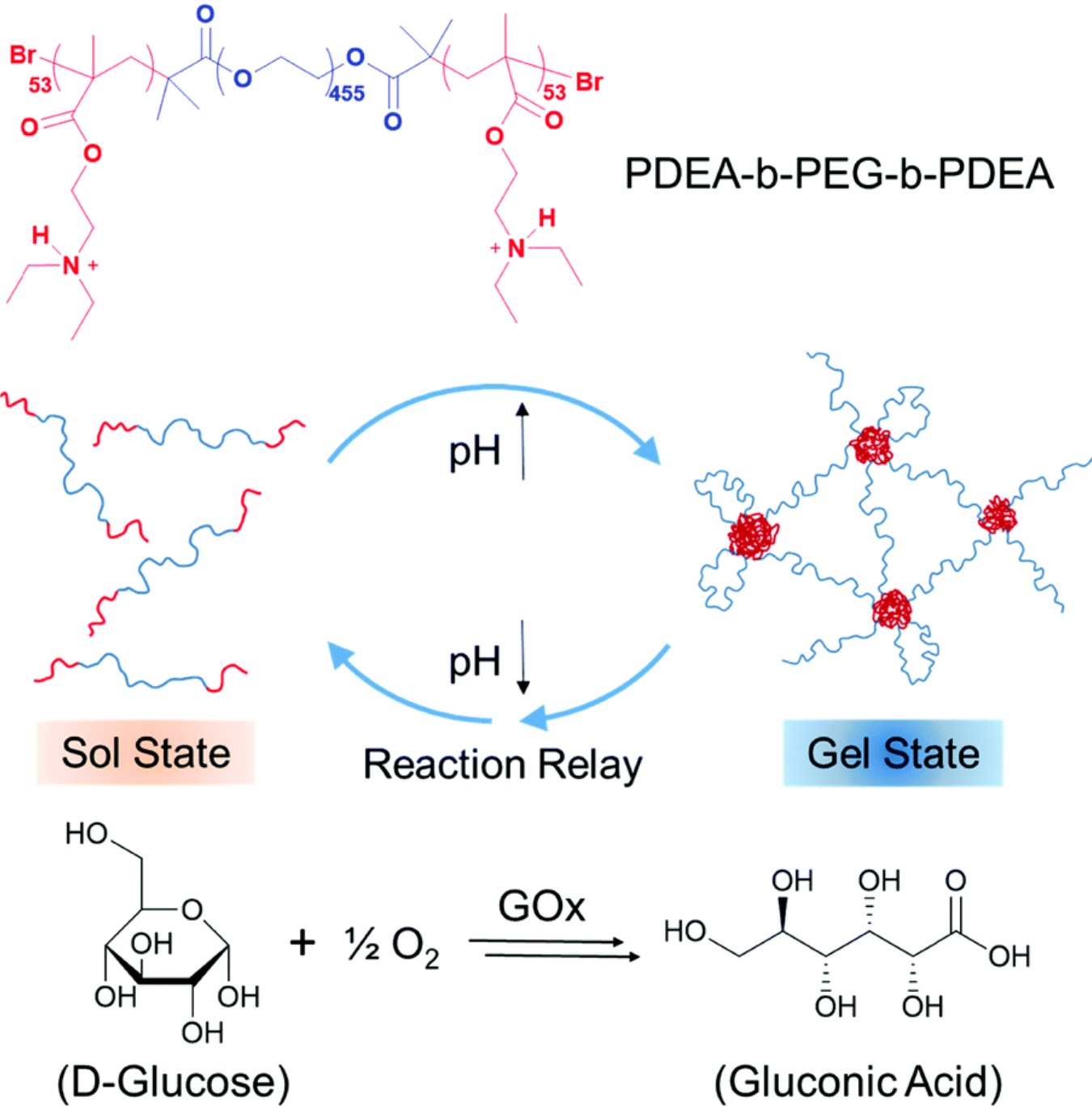
摘要:Biological networks are capable of programming temporal evolution of their crosslinking and dissociation reactions. However, replicating this feature in synthetic self-assemblies is challenging. Herein we report the design of dynamic polymeric hydrogels that undergo delayed dissociation with an onset time precisely tuned from minutes to hours by a reaction relay.

作者: Hu, K. #; Sampaio R. N. #; Marquard S. L.; Tamaki Y.; Meyer T. J.; Meyer G. J.

期刊:Inorg. Chem. 2018, 57, 486-494.
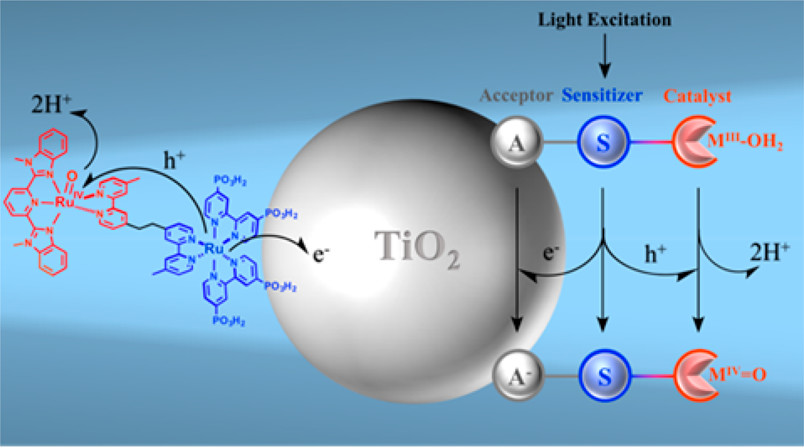
摘要:Described herein is a photochemical approach to the generation of a high-valent metal-oxo species that utilizes a chromophore or “sensitizer”, a semiconducting electron acceptor, and a redox buffer that poises a catalyst’s initial protonation and oxidation state. The photoexcited sensitizer injects an electron into the semiconductor and then oxidizes the catalyst whose reactivity occurs in kinetic competition with back electron transfer. Core–shell SnO2/TiO2 semiconductor nanocrystallites inhibited charge recombination relative to TiO2 acceptors. With low sensitizer-catalyst surface coverages, a novel trapping process is exploited that enables catalysis reactivity to be quantified on time scales ranging from nanoseconds to minutes. A proof-of-principle example provides the demonstration of a light-initiated, (1e–, 2H+)-transfer reaction, with an inverse isotope effect of kH/kD = 0.63, to generate a Ru(IV) oxo species

作者: Nayak, A.#; Hu, K.#; Roy, S; Brennaman, M. K.; Shan, B.; Gish, M.; Meyer, G. J.; Meyer, T. J.

期刊:J. Phys. Chem. C 2018, 122, 13455-13461
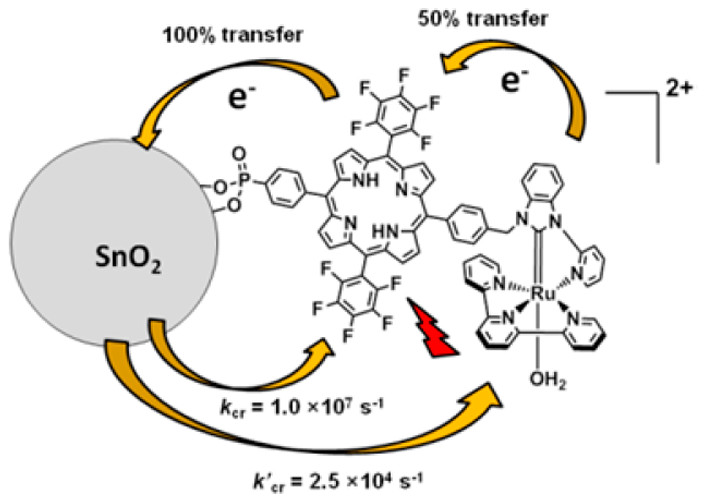
摘要:We describe here the preparation and surface photophysical properties of a covalently linked, chromophore-catalyst assembly between a phenyl phosphonate-derivatized pentafluorophenyl-substituted porphyrin and the water oxidation catalyst, [RuII(terpyridine)(2-benzimidazolylpyridine)(OH2)]2+, in a derivatized assembly of porph-RuII–OH22+. The results of nanosecond transient absorption measurements on nanoparticle SnO2 electrodes in aqueous acetate buffer at pH 4.7 are consistent with rapid electron injection into SnO2 with transfer of oxidative equivalents to the assembly. Electron transfer from the singlet excited state of the porphyrin to the conduction band of the electrode, SnO2(e–)|-porph+-RuII–OH22+, is favored as the porphyrin singlet excited state lies 0.44 eV above the SnO2 conduction band edge. Electron injection is rapid (⟨τinj⟩ < 10–8 s), and occurs with high efficiency. Based on measured redox potentials, following excitation and injection, intra-assembly oxidation of the catalyst, -porph+-RuII–OH22+ → -porph-RuIII–OH2+ + H+, is favored in the transient equilibrium state by 0.62 eV at pH 4.7. However, immediately after the flash, a distribution exists at the surface between isomers with SnO2(e–)|-porph+-RuII–OH22+ undergoing back electron transfer to the surface with an average lifetime of ⟨τ1⟩ ∼ 10–7 s and a slower component for back electron transfer from SnO2(e–)|-porph-RuIII–OH2+ with ⟨τ2⟩ ∼ 4 × 10⁻⁵ s.

作者: Hu, K.; Blair, A. D.; Piechota, E. J.; Schauer, P. A.; Sampaio, R. N.; Parlane, F. G. L.; Meyer, G. J.; Berlinguette, C. P.

期刊:Nature Chem. 2016, 8, 853-859.

摘要:Molecular approaches to solar-energy conversion require a kinetic optimization of light-induced electron-transfer reactions. At molecular–semiconductor interfaces, this optimization has previously been accomplished through control of the distance between the semiconductor donor and the molecular acceptor and/or the free energy that accompanies electron transfer. Here we show that a kinetic pathway for electron transfer from a semiconductor to a molecular acceptor also exists and provides an alternative method for the control of interfacial kinetics. The pathway was identified by the rational design of molecules in which the distance and the driving force were held near parity and only the geometric torsion about a xylyl- or phenylthiophene bridge was varied. Electronic coupling through the phenyl bridge was a factor of ten greater than that through the xylyl bridge. Comparative studies revealed a significant bridge dependence for electron transfer that could not be rationalized by a change in distance or driving force. Instead, the data indicate an interfacial electron-transfer pathway that utilizes the aromatic bridge orbitals.

作者: Hu, K.; Meyer, G. J.

期刊:Langmuir 2015, 31, 11164.

摘要:Intermolecular self-exchange energy and electron-transfer reactions occur without a loss of free energy. This behavior can be exploited for energy-transport applications when molecules that undergo self-exchange transfer reactions are immobilized on a solid support. This Article focuses upon lateral self-exchange reactions and the relevant interfacial chemistry that occurs on the mesoporous nanocrystalline (anatase) TiO2 thin films that are commonly used in dye-sensitized solar cells. It has been known for some time that all of the dye molecules (termed sensitizers) within such thin films can be reversibly oxidized and reduced by lateral self-exchange electron transfer provided that the sensitizer surface coverage exceeds a percolation threshold. Under conditions where excited-state electron injection into TiO2 is unfavored, lateral intermolecular energy-transfer reactions are also known to occur. The self-exchange rate constants have been quantified by electrochemical, absorption, and/or time-resolved anisotropy techniques and understood within the framework of Marcus theory. Such analysis reveals that the reorganization energy and the electronic coupling are sensitive to the identity of the molecular compound. Time-resolved anisotropy measurements have shown that lateral charge and energy-transfer reactions across the TiO2 surface occur in kinetic competition with charge recombination and excited-state relaxation, respectively. The extent to which lateral self-exchange reactions might be exploited for solar energy conversion applications is discussed, as are critical fundamental issues that remain unresolved.

作者: Hu, K.; Robson, K. C. D.; Beauvilliers, E. E.; Schott, E.; Zarate, X.; Arratia-Perez, R.; Berlinguette, C. P.; Meyer, G. J.

期刊:J. Am. Chem. Soc. 2014, 136, 1034.

摘要:Characterization of the redox properties of TiO2 interfaces sensitized to visible light by a series of cyclometalated ruthenium polypyridyl compounds containing both a terpyridyl ligand with three carboxylic acid/carboxylate or methyl ester groups for surface binding and a tridentate cyclometalated ligand with a conjugated triarylamine (NAr3) donor group is described. Spectroelectrochemical studies revealed non-Nernstian behavior with nonideality factors of 1.37 ± 0.08 for the RuIII/II couple and 1.15 ± 0.09 for the NAr3•+/0 couple. Pulsed light excitation of the sensitized thin films resulted in rapid excited-state injection (kinj > 108 s–1) and in some cases hole transfer to NAr3 [TiO2(e–)/RuIII–NAr3 → TiO2(e–)/RuII–NAr3•+]. The rate constants for charge recombination [TiO2(e–)/RuIII–NAr3 → TiO2/RuII–NAr3 or TiO2(e–)/RuII–NAr3•+ → TiO2/RuII–NAr3] were insensitive to the identity of the cyclometalated compound, while the open-circuit photovoltage was significantly larger for the compound with the highest quantum yield for hole transfer, behavior attributed to a larger dipole moment change (Δμ = 7.7 D). Visible-light excitation under conditions where the RuIII centers were oxidized resulted in injection into TiO2 [TiO2/RuIII–NAr3 + hν → TiO2(e–)/RuIII–NAr3•+] followed by rapid back interfacial electron transfer to another oxidized compound that had not undergone excited-state injection [TiO2(e–)/RuIII–NAr3 → TiO2/RuII–NAr3]. The net effect was the photogeneration of equal numbers of fully reduced and fully oxidized compounds. Lateral intermolecular hole hopping (TiO2/RuII–NAr3 + TiO2/RuIII–NAr3•+ → 2TiO2/RuIII–NAr3) was observed spectroscopically and was modeled by Monte Carlo simulations that revealed an effective hole hopping rate of (130 ns)−1.

作者: Hu, K.; Robson, K. C. D.; Johansson, P. G.; Berlinguette, C. P.; Meyer, G. J.

期刊:J. Phys. Chem. C 2014, 118, 17079.

摘要:A series of three bis(tridentate) cycloruthenated sensitizers with furyl, thiophene, or selenophene units attached to the cyclometalated ligand were designed to examine how chalcogen atoms effect interfacial electron transfer events that occur following the absorption of visible light by the sensitizers when attached to mesoporous titania thin films immersed in CH3CN electrolytes. Spectroelectrochemistry established that the RuIII/II reduction potentials were confined to the 0.954–0.965 V vs NHE range for the series and that the density of TiO2 acceptor states were sensitizer-independent. Pulsed light excitation into the metal-to-ligand charge transfer band of the sensitized thin films resulted in rapid excited state injection, kinj > 108 s–1. Charge recombination (RuIII/TiO2(e–) → RuII/TiO2) rate constants were insensitive to the identity of the cyclometalated compound, yet the open circuit photovoltages were markedly lower for the compound containing selenophene. These lower photovoltages appear to be a manifestation of a 4-fold-larger, second-order rate constant measured for the reaction between triiodide and TiO2(e–) in the case that the selenophene comprises the donor fragment of the dye. Adduct formation between oxidized iodide(s) and the selenophene moiety of the sensitizer is implicated.

作者: Hu, K.; Robson, K. C. D.; Berlinguette, C. P.; Meyer, G. J.

期刊:Thin Solid Films 2014, 560, 49.

摘要:It is reported herein that the co-adsorption of chenodeoxycholic acid (CDCA) with the D–π–A organic dyes (E)-3-(5-(4-(bis(4-(hexyloxy)phenyl)amino)phenyl)thiophen-2-yl)-2-cyanoprop-2-enoic acid (Dye-O) or (E)-3-(5-(4-(bis(4-(hexylthio)phenyl)amino)phenyl)thiophen-2-yl)-2-cyanoprop-2-enoic acid (Dye-S) has a significant influence on the ground state absorption spectra of sensitized TiO2 thin films. In the absence of CDCA, evidence for aggregation was observed at even the lowest measured surface coverages. The presence of CDCA also had a significant and very beneficial influence on the unwanted charge recombination reaction between TiO2(e−) and oxidized cobalt mediators.

作者: Hu, K.; Robson, K. C. D.; Johansson, P. G.; Berlinguette, C. P.; Meyer, G. J.

期刊:J. Am. Chem. Soc. 2012, 134, 8352.

摘要:Three ruthenium compounds with triphenyl amine donors were anchored to nanocrystalline TiO2 thin films for interfacial electron-transfer studies. Molecular tuning of reduction potentials enabled the extent of hole transfer from the photo-oxidized ruthenium center to the triphenyl amine to be tuned from zero to unity. Kinetic data revealed two new insights into the unwanted interfacial recombination reaction of the injected electrons with the oxidized compounds. First, recombination was highly sensitive to the concentration of oxidized compounds present at the interface. Second, a significant enhancement of the open circuit photovoltage was realized without a change in the recombination kinetics, behavior attributed to translation of the hole away from the interface thereby generating a larger surface dipole.

作者: Ye, H.; Wang, Z.; Hu, K.; Wu, W.; Gong, X.; Hua, J.*

期刊:Science China Chemistry 2022, 65 (1), 170-181.

摘要:It is a challenge to develop single polymer-based photocatalyst for overall water splitting without adding sacrificial agents due to the insufficient driving force for charge separation and the lack of active sites of organic polymer. Metal oxyhyroxides are widely acted as co-catalyst for photoelectrocatalysis oxygen evolution reaction. Here, we firstly report the peryleno[1,12-bcd] thiophene sulfone-based linear co-polymer PS-5 for photocatalytic overall water splitting by photo-depositing simple and low-cost co-catalyst FeOOH under the visible-light illumination. The density functional theory (DFT) calculations and experimental results indicated clearly that the oxygen vacancies-rich β-FeOOH can effectively promote the separation of photo-generated excitons and provide active sites for photocatalytic oxygen evolution reaction. As a result, the average H2 and O2 production rates of optimized PS-5/β-FeOOH-0.2M reach at ∼170 and ∼76.6 μmol h−1 g−1, respectively, with a stoichiometric ratio at about 2:1. This work provides a simple and low-cost method for the preparation of overall water splitting system based on polymer photocatalyst.

作者: Pan, C.; Chao, J.; Niu, F.; Xie, S.; Gu, H.; Su, T.; Hu, K.; Zhang, D.-W.*; Liu, K.; Liu, G.; Xie, T.; Li, Z.-T.*; Zhang, L.*

期刊:Advanced Materials Interfaces 2022, 9 (1), 2101678.

摘要:Solar-to-hydrogen conversion is a sustainable way of producing renewable fuels, yet the efficiency is limited by the poor photo-induced charge-carrier separation on electrode surface. Developing active and stable hydrogen evolution photocatalysts is challenging and entails intelligent material structure design and tailoring. Here, a novel water dispersible supramolecular metal organic framework (SMOF) is employed as a general and high-performance platform to encapsulate CdS quantum dots (QDs) for achieving highly improved solar-induced H2-production activity. Particularly, the CdS QDs@SMOF heterostructure exhibits an excellent H2 generation activity of 49.4 µmol h−1 (TOF = 47.0/h), exceeding those of most reported heterogeneous metal organic frameworks-based photocatalytic systems. Advanced characterizations disclose that the strong electrostatic interaction and light-induced charge transfer between SMOF and CdS QDs, combined with the high surface area, water dispersible nature, and abundant reactive centers synergistically contribute to this distinguished photocatalytic performance. The work not only demonstrates the water dispersible SMOF can serve as a versatile and effective platform supporting semiconductor to boost the photocatalytic H2-production performance without co-catalysts, but also paves avenues to the design and synthesis of SMOF-based heterostructures for general catalysis applications.

作者: Mi, Z.; Zhou, T.; Weng, W.; Unruangsri, J.; Hu, K.; Yang, W.; Wang, C.; Zhang, K. A. I.; Guo, J.*

期刊:Angew. Chem. Int. Ed. 2021, 60, 9642-9649

摘要:Electron transfer is the rate-limiting step in photocatalytic water splitting. Viologen and its derivatives are able to act as electron-transfer mediators (ETMs) to facilitate the rapid electron transfer from photosensitizers to active sites. Nevertheless, the electron-transfer ability often suffers from the formation of a stable dipole structure through the coupling between cationic-radical-containing viologen-derived ETMs, by which the electron-transfer process becomes restricted. Herein, cyclic diquats, a kind of viologen-derived ETM, are integrated into a 2,2′-bipyridine-based covalent organic framework (COF) through a post-quaternization reaction. The content and distribution of embedded diquat-ETMs are elaborately controlled, leading to the favorable site-isolated arrangement. The resulting materials integrate the photosensitizing units and ETMs into one system, exhibiting the enhanced hydrogen evolution rate (34600 μmol h−1 g−1) and sustained performances when compared to a single-module COF and a COF/ETM mixture. The integration strategy applied in a 2D COF platform promotes the consecutive electron transfer in photochemical processes through the multi-component cooperation.

作者: Wang, D.; Eberhart, M. S.; Sheridan, M. V.; Hu, K.; Sherman, B. D.; Nayak, A.; Wang, Y.; Marquard, S. L.; Dares, C. J.; Meyer, T. J.

期刊:Proc. Nat. Acad. Sci. USA 2018, DOI: 10.1073/pnas.1802903115

摘要:Stabilized photoanodes for light-driven water oxidation have been prepared on nanoparticle core/shell electrodes with surface-stabilized donor–acceptor chromophores, a water oxidation catalyst, and an electron-transfer mediator. For the electrode, fluorine-doped tin oxide FTO|SnO2/TiO2|-Org1-|1.1 nm Al2O3|-RuP2+-WOC (water oxidation catalyst) with Org1 (1-cyano-2-(4-(diphenylamino)phenyl)vinyl)phosphonic acid), the mediator RuP2+ ([Ru(4,4-(PO3H2)2-2,2-bipyridine)(2,2-bipyridine)2]2+), and the WOC, Ru(bda)(py(CH2)(3or10)P(O3H)2)2 (bda is 2,2-bipyridine-6,6-dicarboxylate with x = 3 or 10), solar excitation resulted in photocurrents of ∼500 µA/cm2 and quantitative O2 evolution at pH 4.65. Related results were obtained for other Ru(II) polypyridyl mediators. For the organic dye PP (5-(4-(dihydroxyphosphoryl)phenyl)-10,15,20-Tris(mesityl)porphyrin), solar water oxidation occurred with a driving force near 0 V.

作者: Sampaio, R. N.; Piechota, E. J.; Troian-Gautier, L.; Maurer, A. B.; Hu, K.; Schauer, P. A.; Blair, A. D.; Berlinguette, C. P.; Meyer, G. J.

期刊:Proc. Nat. Acad. Sci. USA 2018, 115, 7248-7253.

摘要:Electron-transfer theories predict that an increase in the quantum-mechanical mixing (HDA) of electron donor and acceptor wavefunctions at the instant of electron transfer drives equilibrium constants toward unity. Kinetic and equilibrium studies of four acceptor–bridge–donor (A-B-D) compounds reported herein provide experimental validation of this prediction. The compounds have two redox-active groups that differ only by the orientation of the aromatic bridge: a phenyl–thiophene bridge (p) that supports strong electronic coupling of HDA > 1,000 cm−1; and a xylyl–thiophene bridge (x) that prevents planarization and decreases HDA < 100 cm−1 without a significant change in distance. Pulsed-light excitation allowed kinetic determination of the equilibrium constant, Keq. In agreement with theory, Keq(p) were closer to unity compared to Keq(x). A van’t Hoff analysis provided clear evidence of an adiabatic electron-transfer pathway for p-series and a nonadiabatic pathway for x-series. Collectively, the data show that the absolute magnitude of the thermodynamic driving force for electron transfers are decreased when adiabatic pathways are operative, a finding that should be taken into account in the design of hybrid materials for solar energy conversion.

作者: Piechota, E. J.; Troian-Gautier, L.; Sampaio, R. N.; Brennaman, M. K.; Hu, K.; Berlinguette, C. P.*; Meyer, G. J.*

期刊:J. Am. Chem. Soc. 2018, 140 (23), 7176-7186.

摘要:The electrochemical and spectroscopic properties of eight bis(tridentate) cyclometalated RuII compounds covalently linked by a phenyl- or xylyl-thiophene bridge to a pendant triphenylamine (TPA) were characterized in fluid solution and immobilized on metal oxide surfaces. Upon surface immobilization, the TPA+/0 reduction potentials of the phenyl-bridged compounds exhibited large changes, ±100 mV, relative to solution-based values, yet those observed for the xylyl-bridged compounds were relatively unchanged. The highest occupied molecular orbital of the surface-immobilized compounds was associated with either TPA or RuII, enabling the study of the electron transfer in opposite directions. Electron transfer in the mixed-valent states of the compounds was found to proceed by different optical pathways for RuII → TPA+ relative to TPA → RuIII. Mulliken–Hush analysis of intervalence charge transfer bands for the phenyl-bridged compounds revealed that the electronic coupling matrix element, HDA, was ∼950 cm–1 for RuII → TPA+, while HDA for TPA → RuIII appeared to be 2500 cm–1. In contrast, the xylyl-bridged compounds were weakly coupled. A superexchange analysis, where unoccupied bridge orbitals were taken directly into account, led to a very different conclusion: HDA did not depend on the charge-transfer direction or path. The results imply that the electron-transfer direction can alter optical charge transfer pathways without influencing the electronic coupling.

作者: Maurer, A. B.; Hu, K.; Meyer, G. J.

期刊:J. Am. Chem. Soc. 2017, 139, 8066

摘要:The titration of iodide into acetonitrile solutions of BiI3 resulted in the formation of [BiI6]3–. Ligand-to-metal charge transfer (LMCT) excitation of [BiI6]3– yielded a transient species assigned as the diiodide anion I2•– directly ligated to Bi, [Bi(I2•–)Ix]n. With 20 ns time resolution, transient absorption measurements revealed the appearance of two species assigned on the analysis of the iodine molecular orbitals as an η2 ligated I2•–, [(η2-I2)BiI4]3– (λmax = 640 nm), and an η1 species [(η1-I2)BiI4]3– (λmax = 750 nm). The rapid appearance of this intermediate was attributed to intramolecular I–I bond formation. The [(η2-I2)BiI4]3– subsequently reacted with 1 equiv of iodide to yield [(η1-I2)BiI5]4–. Interestingly, [(η1-I2)BiI5]4– decayed to ground state products with a first-order rate constant of k = 2 × 10³ s–1. Under the same experimental conditions, I2•– in CH3CN rapidly disproportionates with a tremendous loss of free energy, ΔGo = −2.6 eV. The finding that metal ligation inhibits this energy wasting reaction is of direct relevance to solar energy conversion. The photochemistry itself provides a rare example of one electron oxidized halide species coordinated to a metal ion of possible relevance to reductive elimination/oxidation addition reaction chemistry of transition metal catalysts.

作者: Swords, W. B.; Simon, S. J. C.; Parlane, F. G. L; Dean, R. K.; Kellett, C. W; Hu K.; Meyer, G. J.; Berlinguette, C. P.

期刊:Angew. Chem. Int. Ed. 2016, 55, 1.

摘要:A homologous series of donor–π–acceptor dyes was synthesized, differing only in the identity of the halogen substituents about the triphenylamine (TPA; donor) portion of each molecule. Each Dye-X (X=F, Cl, Br, and I) was immobilized on a TiO2 surface to investigate how the halogen substituents affect the reaction between the light-induced charge-separated state, TiO2(e−)/Dye-X+, with iodide in solution. Transient absorption spectroscopy showed progressively faster reactivity towards nucleophilic iodide with more polarizable halogen substituents: Dye-F < Dye-Cl < Dye-Br < Dye-I. Given that all other structural and electronic properties for the series are held at parity, with the exception of an increasingly larger electropositive σ-hole on the heavier halogens, the differences in dye regeneration kinetics for Dye-Cl, Dye-Br, and Dye-I are ascribed to the extent of halogen bonding with the nucleophilic solution species.

作者: Simon, S. J. C.; Parlane, F. G. L.; Swords, W. B.; Kellett, C. W.; Du, C.; Lam, B.; Dean, R. K.; Hu, K.; Meyer, G. J.; Berlinguette, C. P.

期刊:J. Am. Chem. Soc. 2016, 138, 10406.

摘要:We report here an enhancement in photovoltage for dye-sensitized solar cells (DSSCs) where halogen-bonding interactions exist between a nucleophilic electrolyte species (I–) and a photo-oxidized dye immobilized on a TiO2 surface. The triarylamine-based dyes under investigation showed larger rate constants for dye regeneration (kreg) by the nucleophilic electrolyte species when heavier halogen substituents were positioned on the dye. The open-circuit voltages (VOC) tracked these kreg values. This analysis of a homologous series of dyes that differ only in the identity of two halogen substituents provides compelling evidence that the DSSC photovoltage is sensitive to kreg. This study also provides the first direct evidence that halogen-bonding interactions between the dye and the electrolyte can bolster DSSC performance.

作者: DiMarco, B. N.; Motley, T. C.; Balok, R. S.; Li, G.; Siegler, M. A.; O’Donnell, R. M.; Hu, K.; Meyer, G. J.

期刊:J. Phys. Chem. C 2016, 120, 14226.

摘要:Self-exchange intermolecular RuIII/II electron transfer, a process commonly referred to as “hole-hopping”, is of great interest as it provides a means of charge transport across the surface of nanocrystalline (anatase) TiO2 mesoporous thin films without the loss of free energy. This process was characterized by cyclic voltammetry and chronoabsorptometry for three homologous Ru diimine compounds of the general form [Ru(LL)2(dcbH2)](PF6)2, where LL is 2,2′-bipyridine (bpy), 4,4′-dimethyl-2,2′-bipyridine (dmb), or 4,4′-di-tert-butyl-2,2′-bipyridine (dtb) and dcbH2 is 2,2′-bipyridyl-4,4′-dicarboxylic acid. Apparent electron diffusion coefficients, D, abstracted from this data increased with dtb < bpy < dmb. Both techniques were consistent with this trend, despite differences in the magnitude of D between the two methods. Temperature dependent measurements revealed an activation barrier for electron self-exchange of 250 ± 50 meV that was within this error the same for all three diimine compounds, suggesting the total reorganization energy, λ, was also the same. Application of Marcus theory, with the assumption that the 900 ± 100 meV total reorganization energy for self-exchange electron transfer was independent of the Ru compound, revealed that the electronic coupling matrix element, HAB, followed the trend dtb (0.02 meV) < bpy (0.07 meV) < dmb (0.10 meV). The results indicate that insulating side groups placed on redox active molecules can be utilized to tune the electronic coupling and hence self-exchange rate constants without significantly altering the reorganization energy for electron transfer on TiO2 surfaces.

作者: Li, G.; Hu, K.; Robson, K. C. D.; Gorelsky, S. I.; Meyer, G. J.; Berlinguette, C. P.; Shatruk, M.

期刊:Chem. Eur. J. 2015, 21, 2173.

摘要:Two novel tris-heteroleptic Ru–dipyrrinates were prepared and tested as sensitizers in the dye-sensitized solar cell (DSSC). Under AM 1.5 sunlight, DSSCs employing these dyes achieved power conversion efficiencies (PCEs) of 3.4 and 2.2 %, substantially exceeding the value achieved previously with a bis-heteroleptic dye (0.75 %). As shown by electrochemical measurements and DFT calculations, the improved PCEs stem from the synthetically tuned electronic structure, which affords more negative excited state redox potentials and favorable electron injection into the TiO2 conduction band. Electron injection was quantified by nanosecond transient absorption spectroscopy, which revealed that the highest injection yield is achieved with the dye that acts as the strongest photoreductant.

作者: Cottingham, P.; Wallace, D. C.; Hu, K.; Meyer, G. J.; McQueen T. M.

期刊:Chem. Commun. 2015, 51, 7309.

摘要:Photocurrent measurements on devices containing perovskite (CH3NH3)PbI3 show two distinct spectral responses when deposited in a mesoporous oxide matrix, compared with one response for planar perovskite alone. With a TiO2 matrix, the shorter wavelength response has an inverted temperature response with increasing performance on cooling.

作者: Robson, K. C. D.; Hu, K.; Meyer, G. J.; Berlinguette, C. P.

期刊:J. Am. Chem. Soc. 2013, 135, 1961.

摘要:Two donor–acceptor organic dyes have been synthesized that differ only by a two-heteroatom change from oxygen to sulfur within the donor unit. The two dyes, (E)-3-(5-(4-(bis(4-(hexyloxy)phenyl)amino)phenyl)thiophen-2-yl)-2-cyanoprop-2-enoic acid (Dye-O) and (E)-3-(5-(4-(bis(4-(hexylthio)phenyl)amino)phenyl)thiophen-2-yl)-2-cyanoprop-2-enoic acid) (Dye-S), were tested in solar cell devices employing both I3–/I–-based and [Co(bpy)3]3+/2+ redox mediators. Power conversion efficiencies over 6% under simulated AM 1.5 illumination (1 Sun) were achieved in both electrolytes. Despite similar optical and redox properties for the two dyes, a consistently higher open-circuit voltage (Voc) was measured for Dye-S relative to Dye-O. The improved efficiency observed with Dye-S in an iodide redox mediator is against the commonly held view that sulfur atoms promote charge recombination attributed to inner-sphere interactions. Detailed mechanistic studies revealed that this is a consequence of a 25-fold enhancement of the regeneration rate constant that enhances the regeneration yield under open circuit conditions. The data show that a high short circuit photocurrent does not imply optimal regeneration efficiency as is often assumed.

作者: Li, G.; Hu, K.; Yi, C.; Knappenberger, Jr., K. L.; Meyer, G. J.; Gorelsky, S. I.; Shatruk, M.

期刊:J. Phys. Chem. C 2013, 117, 17399.

摘要:Three Ru(II) dipyrrinate complexes, [Ru(bpy)2(3-TDP)](PF6) (1), [Ru(H2dcbpy)(Hdcbpy)(3-TDP)] (2), and [Ru(H2dcbpy)(Hdcbpy)(TPADP)] (3) (bpy = 2,2′-bipyridine; dcbpy = 4,4′-dicarboxylato-2,2′-bipyridine; 3-TDP = 3-thienyl-dipyrrinate; TPADP = triphenylamino-dipyrrinate), have been synthesized and characterized by electrochemical and photophysical methods as well as by theoretical electronic structure calculations on the DFT level. The complexes exhibit panchromatic light harvesting due to complementary ligand-based absorption around 450 nm and metal-to-ligand charge transfer (MLCT) absorption around 530 nm. Complexes 2 and 3 have been investigated as potential sensitizers for the dye-sensitized solar cell (DSSC). Time-dependent DFT calculations reveal the preferential localization of an excited-state electron on the H2dcbpy ligands, leading to a favorable scenario for electron injection from these anchoring ligands into TiO2. Solution-phase transient absorption spectroscopy was used to follow the excited state dynamics of methyl-ester derivatives of 2 and 3. Excitation with a 400-nm laser pulse resulted in two bleaches centered at 460 and 540 nm and corresponding to the ligand-based and MLCT transitions, respectively. A rapid 2 ps loss of the ligand based bleach corresponded with a growth of the MLCT bleach that were interpreted as the result of vibrational relaxation between metal-centered and ligand-centered frontier orbitals. The electron-injection kinetics were studied on dyes 2 and 3 anchored on the TiO2 surface. The excited state electron-injection yield and incident photon-to-current efficiency were dramatically suppressed by addition of tert-butylpyridine (TBP), indicating that the lowest excited state was positioned close in energy to the TiO2 acceptor states. Nevertheless, the injection yield measured with 416-nm excitation was less sensitive to the TBP concentration than that measured with 532-nm excitation, thus suggesting the possibility of hot-electron injection from the upper excited states generated by the ligand-based excitations. Based on the findings of this study, a pathway is proposed for improving the electron-injection yield of Ru-dipyrrinate dyes and increasing the power-conversion efficiency of the DSSC incorporating these dyes.

作者: Cui, Y. H.; Xue, M. Z.; Wang, X. L.; Hu, K.; Fu, Z. W.

期刊:Electrochem. Commun. 2009, 11, 1045.

摘要:InP thin film has been successfully fabricated by pulsed laser deposition (PLD) and was investigated for its electrochemistry with lithium for the first time. InP thin film presented a large reversible discharge capacity around 620 mAh g−1. The reversibility of the crystalline structure and electrochemical reaction of InP with lithium were revealed by using ex situ XRD and XPS measurements. The high reversible capacity and stable cycle of InP thin film electrode with low overpotential made it one of the promise energy storage materials for future rechargeable lithium batteries.